
Meal Prep and Disordered Eating: A Gentle, Non-Diet Perspective
Oh, the infamous meal prep.
For many people, meal prep is deeply tied to dieting. For some, it was a core part of disordered eating. If that’s true for you, you’re not alone.
How many diets have you been on that encouraged prepping food so you could eat exactly what you planned, control portions, and “avoid temptation”? On the surface, it was framed as being organized or healthy. Underneath, it often reinforced rigidity, perfectionism, and constant mental focus on food.
For those healing from disordered eating, meal prep can feel complicated, especially when it has been linked to control, rules, and the idea that there is a “right” way to eat.
Why meal prep can feel harmful in eating disorder recovery
Meal prep, as it is often promoted, can unintentionally mirror disordered eating patterns.
It tends to encourage:
Rigid eating schedules and portion control
Moralizing food as “good” or “bad”
A sense that meals must be planned perfectly to be acceptable
Excessive mental energy devoted to food
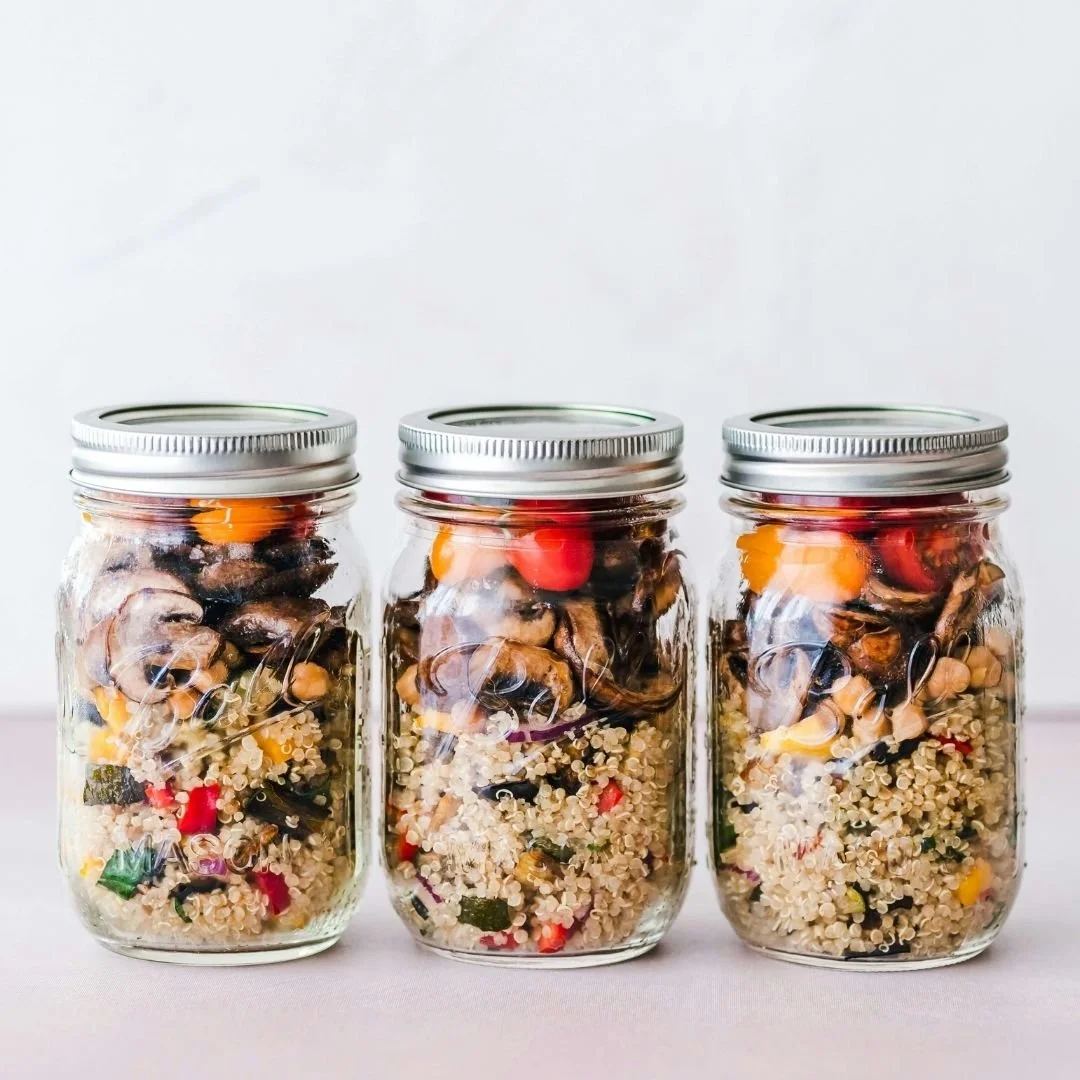
If you have ever searched “meal prep” online, you have probably seen perfectly plated meals, colorful salads in jars, and pristine containers lined up for the week. It is meant to be aspirational. Ideal. Controlled.
For someone with a history of disordered eating, this version of meal prep can reinforce the belief that food needs to be managed tightly or that deviation equals failure.
Can meal prep ever be supportive?
Here is where things get more nuanced. Even if meal prep was once part of disordered eating for you, that does not mean it can never be supportive. Tools are not inherently harmful. How they are used and how they impact your relationship with food is what matters.
For some people, gentle structure can actually help in recovery when it:
Supports consistent nourishment
Reduces barriers to eating
Lowers decision fatigue
Helps food take up less mental space, not more
So is meal prep a “better” way to eat?
The honest answer is this: It depends.
Meal prep is not something you should or should not do. You are not obligated to meal prep. It might be helpful for you depending on your life, energy, and where you are in your recovery.
A good rule of thumb is this: If something consistently harms your relationship with food, it likely is not serving you, even if it is praised by our culture.
How to tell if meal prep is helping or hurting your relationship with food
If you are unsure where you land, here are a few questions to gently explore:
What feelings come up when you think about meal prep?
Does it feel like obligation, pressure, or stress? Or does it feel supportive, calming, or neutral?
What foods are you prepping?
Are they only foods you have labeled as “healthy” or “good”? What would it be like to prep something you have historically avoided or judged?
How flexible does it feel?
Does meal prep allow for choice and change, or does it feel rigid, all or nothing, or anxiety provoking?
There are no right or wrong answers here. These reflections are about information, not judgment.
Gentle meal prep ideas that are not about perfection
If meal prep does feel supportive, or if you are curious about approaching it differently, this might help. Gentle meal prep is not about planning every meal or eating the same thing all week. It is about making nourishment more accessible.
It might look like:
Cooking one carb you enjoy, such as pasta, rice, or potatoes, to use across a few meals
Washing or cutting fruit so it is easier to eat
Keeping frozen or convenience foods on hand to reduce effort
Prepping components, not full meals
Repeating foods because they are comforting, not because they are “optimal”
For example, I often make a big batch of pasta or rice so I can easily add it to meals for a few days. That is it. No aesthetic containers. No perfectly balanced macros. Just support.
None of this needs to be pretty, Instagram worthy, or perfectly portioned.
Meal prep is not moral and neither are you
Healing your relationship with food is not about doing things “right.” It is about noticing what supports you and what does not, without shame.
Meal prep is not good or bad. It is simply a tool. You get to decide whether it belongs in your life, how you use it, or whether you skip it entirely.
Common questions about meal prep and disordered eating
Is meal prep bad if I am in eating disorder recovery?
Not inherently. What matters is whether it supports nourishment and flexibility or reinforces control and anxiety.Can structure be part of intuitive eating?
Yes. Structure and intuition are not opposites. Gentle structure can support intuitive eating, especially when rebuilding trust with your body.What if meal prep makes me feel anxious or obsessive?
That is important information. It may be a sign that this tool is not supportive for you right now, and that is okay.
If you are working on healing your relationship with food and your body and want deeper support, this approach is central to helping my clients healing their relationship to food. You are not failing for struggling with food. You are responding to a system that taught you to distrust yourself.
And you are allowed to do this differently.
You’ll also love…
Want support in your eating disorder or disordered eating recovery journey?
At Bravespace Nutrition, I support people in healing their relationship with food and their body through a non-diet, compassionate approach. I know how complex and personal this work can be, and you do not have to navigate it alone. If you are curious about working together, you can start with a free 15-minute discovery call, check out my courses, or reach out via email anytime!

Author bio: Katherine Metzelaar, RDN, CD, is an anti-diet registered dietitian and founder of Bravespace Nutrition. She helps people heal their relationship with food and body image, overcome diet culture pressures, and cultivate a compassionate, non-diet approach to eating and self-care. Katherine empowers her clients to trust their bodies, enjoy food without shame, and experience freedom from restrictive dieting.