What Is a "What I Eat in a Day" (WIEIAD)? Meaning, Risks & How These Videos Can Affect Your Relationship With Food
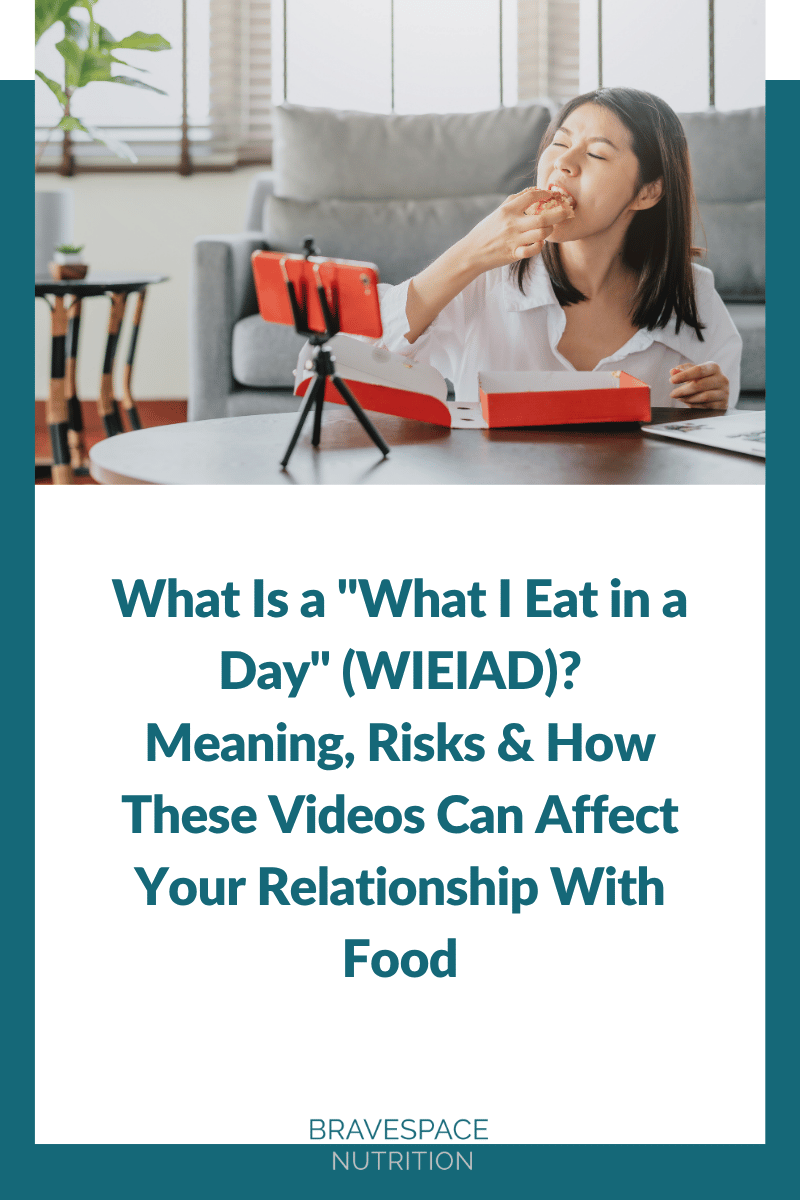
"What I Eat in a Day," often shortened to WIEIAD, has become one of the biggest food trends on social media.
Whether you're scrolling TikTok, Instagram Reels, or YouTube, you've likely come across videos of people documenting everything they eat in a day. Some creators post them as meal inspiration and others frame them as wellness advice, fitness content, or eating disorder recovery. At first glance, these videos can seem harmless. But if you've ever found yourself comparing your meals, questioning your hunger, or wondering whether you're eating "the right way" after watching one, you're not alone.
In this article, you'll learn:
What WIEIAD means
Why these videos have become so popular
How they can influence your relationship with food and your body
Why they can be especially challenging for people recovering from eating disorders or chronic dieting
What you can do if they leave you feeling worse instead of better
What is WIEIAD?
WIEIAD stands for "What I Eat in a Day." If you've been wondering what WIEIAD means or why these videos seem to be everywhere on social media, you're not alone.
These are short-form social media videos in which someone shares what they claim to eat over the course of a day. While these videos can seem like a simple look at someone else's meals, they often influence the way we think about food, hunger, health, and our own bodies in ways we don't immediately recognize.
Some creators describe their videos using phrases like:
“What I eat in a day to stay lean”
“What I eat in a day as a healthy girl”
“What I eat in a day in eating disorder recovery”
“What I eat in a day to build muscle”
“What I eat in a day for hormone health”
“What I eat in a day without tracking calories”
Even when calories, weight, or body size are never mentioned directly, these videos often communicate subtle messages about what "healthy" eating is supposed to look like and what bodies are supposed to look like too.
Why are “what I eat in a day” videos so compelling?
You are not drawn to these videos because something is wrong with you. Food is personal, but it’s also social. You naturally look to other people for information about what is normal, acceptable, desirable, or safe. Seeing what another person eats can temporarily reduce uncertainty and offer the sense that there might be a correct way to eat.
This can feel especially appealing if you already experience anxiety around food. You may find yourself hoping that someone else’s meals will answer questions like:
Am I eating too much?
Am I eating often enough?
Is this portion normal?
Should I eat more protein?
Do I eat too many carbohydrates?
Is it okay to have dessert every day?
Why am I still hungry when this person seems satisfied?
What should I eat if I want my body to look like theirs?
The video may promise inspiration, but what you are often searching for is reassurance. Unfortunately, reassurance found through comparison rarely lasts. You might feel calmer for a moment, only to become more preoccupied with food afterward.
A “what I eat in a day” video is not an accurate picture of someone’s needs
No single day of eating can tell you what another person regularly eats or what your body needs.
You usually do not know:
Whether the creator showed everything they ate
Whether the food was filmed on the same day
Whether meals or snacks were left out
Whether the portions shown match what was actually eaten
Whether the creator was unusually busy, sick, traveling, stressed, or less hungry
Whether they ate more before or after filming
Whether they have a history of dieting or an eating disorder
Whether they are receiving medical or nutritional guidance
Whether the content was designed primarily to generate views
Even carefully completed dietary records are limited by memory, estimation, and changes in behavior that can occur when someone knows their eating is being recorded. A polished social media video provides even less reliable information because it is also shaped by editing, aesthetics, branding, and audience expectations.
You are comparing the full complexity of your own eating with a curated snapshot of someone else’s. Those two things are not equal.
Your brain learns from what it repeatedly sees
Repeated exposure matters. The more often you see a particular type of meal, portion, body, or eating pattern, the more familiar it becomes. Familiarity can influence what your brain begins to notice, expect, and interpret as normal.
If your feed repeatedly shows small portions, green juices, protein-focused meals, low-calorie substitutions, or carefully arranged bowls of vegetables, that style of eating may begin to feel ordinary or ideal, even when it is not adequate, accessible, enjoyable, or appropriate for you.
And what’s interesting is that you don’t even have to consciously agree with the content for it to affect you. You may intellectually understand that social media is curated while still beginning to question whether your meals are too large, too processed, too repetitive, too expensive, not colorful enough, or not “healthy” enough.
That is one reason these videos can be so difficult to brush off. Their influence often happens quietly through repetition.
“What I eat in a day” videos invite comparison
Comparison is built into the format. The creator shows you what they ate, and your brain automatically compares it with what you eat.
You may compare:
The amount of food
Meal timing
Portion sizes
Ingredients
Hunger and fullness
How often they snack
How much variety they have
How their body looks
How much they exercise
How controlled or effortless their eating appears
The comparison is rarely fair. Your body has its own energy needs, genetics, medical history, food preferences, access to food, schedule, stress level, movement, medications, hormonal changes, and relationship with food. You also cannot determine someone’s health, nutritional status, or relationship with food by looking at their body or watching a short video.
Still, the comparison may leave you believing that their eating is evidence of discipline and yours is evidence of failure.
It is not.
The body shown in the video is often part of the message
Many “what I eat in a day” videos begin with the creator showing their body. That is not accidental. The body can function as an unspoken promise: eat like me, and perhaps you can look like me.
The creator may never explicitly make that claim, but when a thin, muscular, or conventionally attractive body is positioned beside a day of eating, viewers can easily interpret the food as an explanation for the body. This ignores genetics, privilege, health conditions, medications, weight history, dieting behaviors, editing, posing, and countless other factors that influence how a body looks.
These videos can make hunger feel suspicious
One of the most harmful effects of these videos is how easily they can make you distrust your own hunger.
You may watch someone eat less than you and feel confused about why you need more. You may see a small breakfast described as “so filling” and wonder why you would still be hungry. You may begin delaying snacks, shrinking portions, or trying to recreate meals that do not satisfy you.
Two people can eat differently and both be responding appropriately to their bodies. Your needs can also change from one day to another based on sleep, stress, movement, illness, recovery, hormones, and countless other factors.
Someone else appearing satisfied by a certain amount of food does not mean that amount should satisfy you.
Eating disorder recovery content can still be triggering
Some “what I eat in a day” videos are labeled as eating disorder recovery content and may be posted with genuinely supportive intentions.
Seeing someone challenge a fear food or eat regularly can sometimes help you feel less alone. But recovery videos can also become another source of comparison.
You may start wondering:
Am I eating more than they are?
Am I recovering too quickly?
Why do they look different from me?
Should my meals look like theirs?
Am I sick enough to need this much food?
Why am I still struggling if they seem comfortable?
Am I doing recovery correctly?
Recovery cannot be accurately represented by a montage of meals. Eating disorder recovery includes fear, flexibility, distress, support, grief, setbacks, medical care, changing needs, and the gradual process of learning to trust yourself again. What is appropriate for one person’s recovery may be completely inappropriate for yours.
You do not need to use another person’s intake as a benchmark for whether you are recovering correctly.
Even dietitians’ videos should not be treated as personalized advice
Dietitians and other healthcare professionals also post “what I eat in a day” content. A credential does not make someone’s personal food intake relevant to your body.
A dietitian may intend to normalize food, demonstrate flexibility, or offer meal ideas. But without knowing your health history, nutritional needs, access to food, preferences, eating disorder history, and current relationship with food, their meals are still not a prescription for you. Helpful nutrition guidance should support your ability to meet your needs and develop trust in yourself, and it should not require you to imitate the eating habits of a stranger online.
How to tell whether these videos are affecting you
You do not have to prove that a piece of content is objectively harmful before deciding that it is not good for you. It may be worth paying attention if you notice that “what I eat in a day” videos leave you:
Comparing your portions with someone else’s
Feeling guilty about what you ate
Questioning whether you deserve a snack
Trying to copy someone else’s meals exactly
Ignoring your hunger because they appeared to eat less
Feeling anxious about eating foods that were not shown
Believing your meals need to look attractive or “balanced” enough
Body checking before or after watching
Seeking out more food content even though it makes you feel worse
Feeling as though everyone else knows how to eat except you
Sometimes the clearest information comes from noticing how you feel after watching. Do you feel inspired and supported, or more anxious and disconnected from yourself?
What can you do if “what I eat in a day” videos make eating harder?
You do not necessarily need to leave social media or avoid every image of food. But you are allowed to make your online environment more supportive.
1.Unfollow or mute accounts that increase food anxiety
You do not owe anyone access to your attention. An account can have good intentions and still be unhelpful for you. You can mute, unfollow, block, or select “not interested”.
2. Pay attention to the entire video, not just the food
Notice whether the content connects eating with body size, productivity, exercise, morality, or worth.
Ask yourself:
Is the creator showing their body as evidence that their eating is correct?
Are foods being labeled as clean, guilty, healthy, bad, or indulgent?
Does the video make eating seem effortless and controlled?
Is the creator presenting personal behavior as universal advice?
Do I feel more trusting of my body after watching, or less?
3. Interrupt the comparison
When you notice yourself comparing, remind yourself: This is a curated snapshot of another person’s eating. It cannot tell me what my body needs. You may need to repeat this more than once. The goal is not to stop every comparison immediately., but rather it is to notice what is happening before the comparison starts directing your choices.
4. Return to your own body and circumstances
Instead of asking, “Is this what I should eat?” consider asking:
What would feel satisfying right now?
What food is available to me?
What have I eaten so far today?
What would help me feel adequately nourished?
What sounds good?
What would support me through the next few hours?
Am I choosing this because I want it, or because I saw someone else eat it?
Your needs matter even when they do not resemble what you see online.
5. Seek individualized support
If food content regularly changes what you allow yourself to eat, increases body checking, or intensifies eating disorder thoughts, more support may be helpful.
You don’t have to wait until things become severe enough to deserve help. A dietitian or therapist experienced in eating disorders and body image can help you understand what is happening and build a relationship with food that is based less on comparison and more on your actual needs.
You do not need to learn how to eat from strangers online
“What I eat in a day” videos offer the illusion of certainty. They suggest that if you can see exactly what another person eats, you might finally understand what you should eat too. But your body cannot be understood through someone else’s edited day.
Learning to trust yourself may involve turning down the volume on other people’s eating so you can begin hearing your own needs more clearly. That does not mean you will never enjoy food content or get meal ideas online. It means remembering that inspiration is not instruction, and another person’s intake is not a standard you need to meet.
You deserve a relationship with food that makes room for your hunger, preferences, culture, finances, schedule, pleasure, health, and changing needs. No thirty-second video can capture all of that.
Frequently Asked Questions

What does WIEIAD mean?
WIEIAD stands for "What I Eat in a Day." These are short-form social media videos in which creators share everything they eat over the course of a day. While they often appear to be simple meal inspiration, they can also influence body image, food comparison, and eating behaviors.
Are "What I Eat in a Day" videos harmful?
They are not necessarily harmful to every viewer, but they can negatively affect people who struggle with eating disorders, disordered eating, chronic dieting, food guilt, or body image concerns. These videos may encourage comparison, normalize restrictive eating, and make viewers question their own hunger and nutritional needs.
Why do I compare my food with what other people eat?
Comparison is a normal human experience. Your brain naturally looks to other people for information about what is typical or acceptable. Social media intensifies this process by repeatedly showing curated meals and bodies without providing the full context behind them.
Can "What I Eat in a Day" videos trigger an eating disorder?
A single video does not cause an eating disorder. Eating disorders develop through a complex combination of biological, psychological, social, and environmental factors. However, food-focused content can intensify restriction, comparison, body dissatisfaction, food guilt, and eating disorder behaviors in someone who is already vulnerable or struggling.
How can I stop seeing WIEIAD videos?
You can unfollow or mute accounts, select "Not Interested," block specific creators, avoid interacting with triggering posts, and intentionally engage with content that supports a more flexible relationship with food and your body. Over time, these actions influence what appears in your feed.
Looking for support with food or body image?
If social media leaves you questioning your hunger, comparing your eating, or feeling as though you can never get food “right,” you do not have to work through that alone.
At Bravespace Nutrition, I offer virtual, weight-inclusive nutrition counseling for adults struggling with eating disorders, disordered eating, chronic dieting, and body image concerns. Together, we can help you move away from outside rules and comparison and toward a relationship with food that feels more flexible, nourishing, and your own.