
When Gratitude Feels Forced During the Holidays: Making Space for What’s Real
by Katherine Metzelaar, MSN, RDN, CD
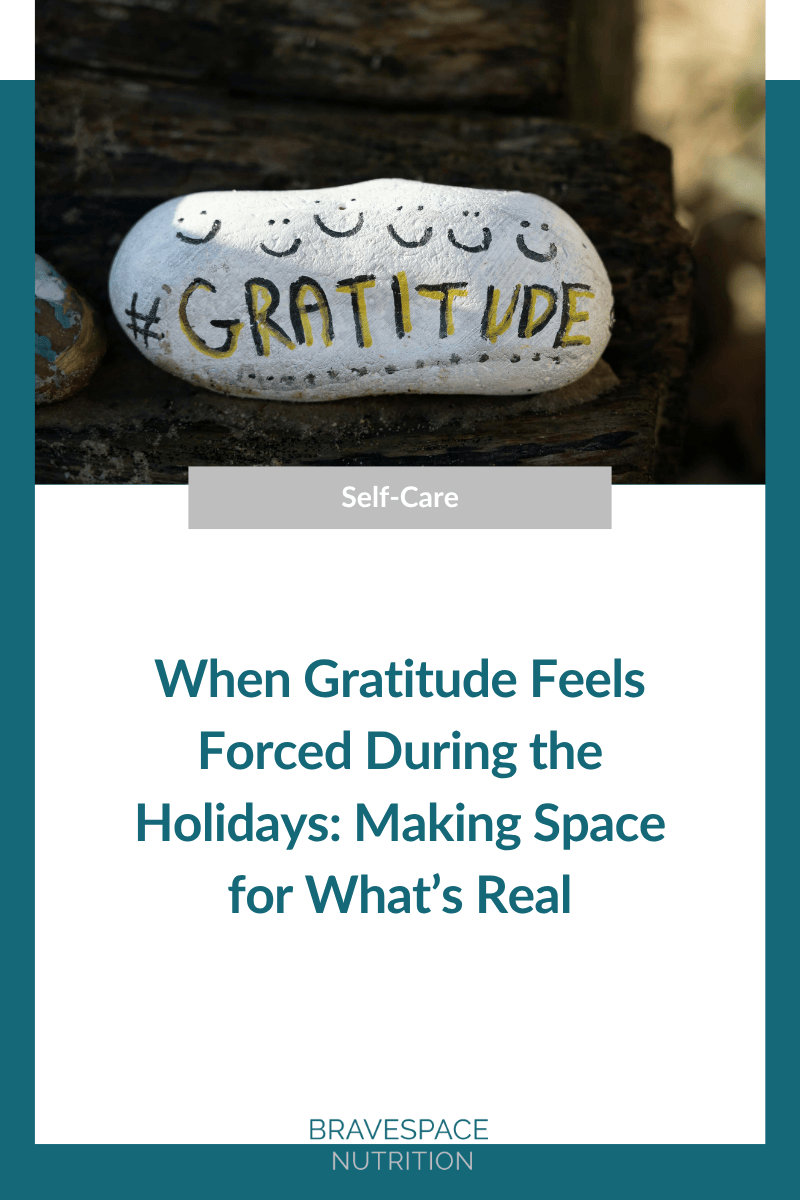
The Truth About Holiday “Gratitude”
The truth is, the holidays can feel hard.
Here in the U.S., Thanksgiving often kicks off a season filled with celebration, and with it, the pressure to feel grateful, happy, and positive no matter what.
But for many people, especially those in eating disorder recovery or healing their relationship with food and body, this time of year can feel anything but easy. Comments about food, guilt, or weight seem to come from every direction, making it hard to stay grounded in your own healing path.
At the same time, setting boundaries with family can feel impossible. You may worry about hurting feelings, “ruining the vibe,” or being seen as ungrateful.
And on top of all of that, you might hear messages like, “Be grateful,” “Someone else has it worse,” or “Good vibes only.”
Even when these words are well-intentioned, they often land as dismissive and isolating.
Why Forced Gratitude Doesn’t Help
Being told to “just be thankful” when you’re hurting doesn’t make pain disappear, it buries it.
Forced gratitude can create pressure to deny your real experience and can deepen feelings of shame or loneliness.
You don’t have to rush to feel grateful when you’re grieving, anxious, or simply exhausted.
This year, instead of forcing gratitude, what if you made space for whatever is real: your sadness, anger, longing, or joy?
A Personal Story About Grief and the Holidays
For me, the holidays are complicated. They bring up deep feelings of absence and loss after my mom died. Along with her death came other painful family changes, and this season has never felt the same since.
For a long time, I just wanted to “get through it.” I would distract myself, scroll endlessly, or avoid my emotions altogether, and that sometimes led to engaging in old disordered eating and exercise patterns.
Over time, I learned that numbing doesn’t heal pain; it just delays it. Now, I let myself cry, journal, walk, and breathe through what surfaces. I also share it with the people I love. I try to stay in relationship with myself, even when it’s messy. Abandoning myself is no longer an option.
Feel Your Feelings to Heal
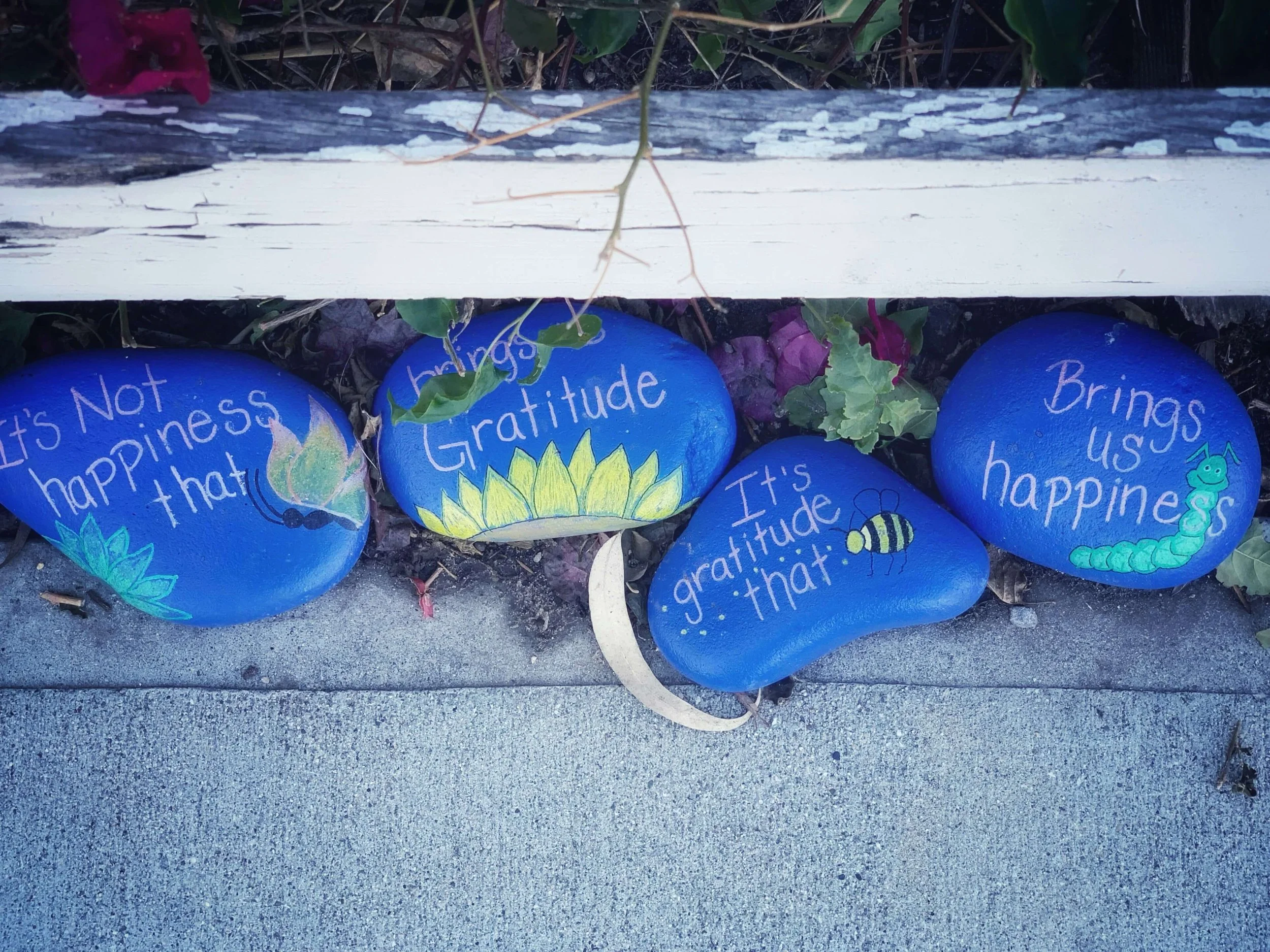
This year, I invite you to honor what’s actually true for you.
Don’t force gratitude or joy if they don’t fit right now. You can hold both grief and appreciation, both pain and presence.
Feeling your feelings is part of healing your relationship with food and body. Many disordered eating and exercise behaviors develop as ways to numb or distract from overwhelming emotions.
Remember: all coping has wisdom in it, even the parts that hurt you.
How to Practice Real Gratitude
If forced gratitude doesn’t help, what does? Practicing real gratitude means allowing yourself to notice what’s present, not what you think should be.
Authentic gratitude isn’t about denying pain or pretending everything’s okay.
It’s about making room for all parts of your experience: the grief, the joy, the frustration, and the tenderness.
Here are a few ways to explore gratitude that honors your full humanity:
Start small. Notice the smallest things that bring you comfort or steadiness: a warm blanket, a meal that nourishes you, a text from a friend. Real gratitude starts with awareness, not performance.
Pair gratitude with truth. You can be grateful and tired. You can appreciate your body and still feel disconnected from it. Let both exist at once.
Use your senses. Instead of forcing a mental list of what you “should” be thankful for, ground yourself in sensory gratitude: the smell of something cooking, the sound of laughter, the feeling of sunlight on your skin.
Let gratitude find you. Some days, gratitude appears naturally when you create space for rest, quiet, or reflection. Allow for this too.
Release comparison. Gratitude isn’t a competition or a moral benchmark. You don’t owe anyone proof of how grateful you are.
Practicing gratitude in this way helps you stay connected to your body and emotions without bypassing them. It can also reduce the need to use food or exercise to numb difficult feelings, a core part of intuitive eating and body trust work.
You Deserve Space for Your Whole Experience
This holiday season and always, you deserve relationships that can hold your full humanity: your pain, your joy, your grief, and your growth.
And if you don’t have that kind of support yet, know that it can come with time. For now, start with being that compassionate presence for yourself.
You’re allowed to feel it all.

Here are some reflection questions to take with you this holiday season:
What emotions come up for me during the holidays?
Where do I feel pressure to “be grateful”?
What would it look like to honor what’s really here instead?
How do I usually numb or distract myself from discomfort?
What helps me stay in relationship with myself when things feel hard?
What kind of support or connection would help me this season?
You’ll also love…
Author bio: Katherine Metzelaar, MSN, RDN, is an non-diet registered dietitian and founder of Bravespace Nutrition. She helps people heal their relationship with food and body image, overcome diet culture pressures, and cultivate a compassionate, non-diet approach to eating and self-care. Katherine empowers her clients to trust their bodies, enjoy food without shame, and experience freedom from restrictive dieting.
Ready to Feel More Peaceful Around Food and Emotional Eating During the Holidays?
Healing your relationship with food and body is not about forcing gratitude, but rather it’s about building trust, compassion, and presence with yourself. In her Seattle-based nutrition counseling practice, non-diet dietitian Katherine Metzelaar, RDN helps people recover from disordered eating, chronic dieting, body image struggles, and holiday food anxiety through intuitive eating and trauma-informed care.